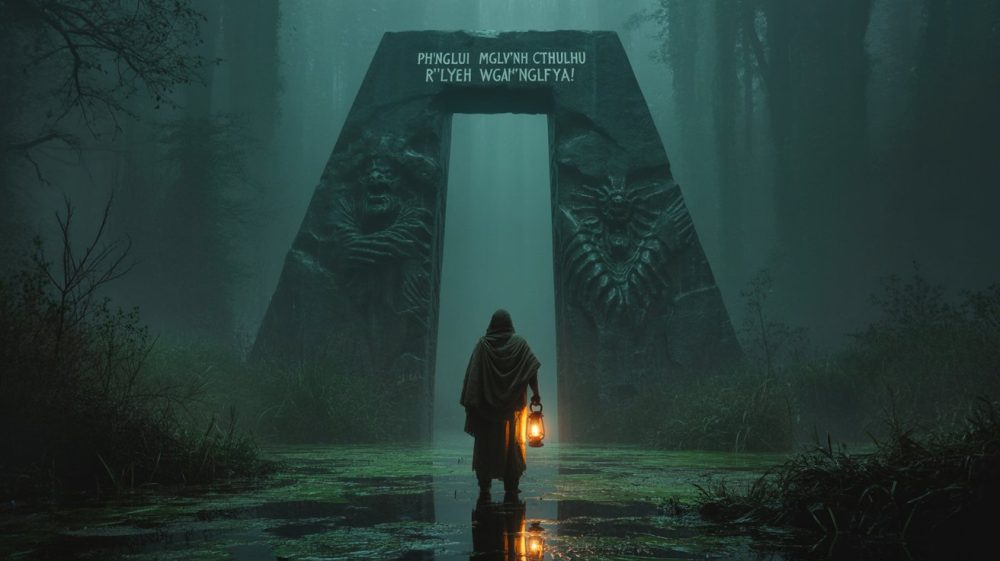
The Top-18 Dark Cosmic Horror Books
Cosmic horror strips away humanity’s comfortable delusions about our place in the universe. Unlike monster stories or ghost tales, cosmic horror confronts us with the terrifying truth that we are insignificant specks in an indifferent cosmos filled with forces beyond our understanding. These 18 books represent the finest examples of literature that makes readers question not just their safety, but their very reason for existing in a meaningless universe.
⚠️ Existential Warning: This article discusses books that can trigger deep philosophical anxiety, existential depression, and nihilistic thoughts. Readers currently struggling with depression, anxiety, or questions about life’s meaning should approach these books with caution.
Understanding Cosmic Dread Levels
Cosmic horror operates on different scales of existential terror, from personal insignificance to complete universal meaninglessness:
Level 1: Personal Insignificance
- What it means: Individual humans are powerless against vast cosmic forces
- Reader impact: Feeling small and helpless in face of larger powers
- Philosophical theme: “I don’t matter in the grand scheme”
- Examples: Ancient gods awakening, alien contact scenarios
Level 2: Species Irrelevance
- What it means: All humanity is meaningless to cosmic entities
- Reader impact: Questioning human importance and achievements
- Philosophical theme: “Our entire species is insignificant”
- Examples: Earth as cosmic accident, humans as insects to aliens
Level 3: Reality Instability
- What it means: Physical laws and reality itself are unreliable
- Reader impact: Doubt about nature of existence and truth
- Philosophical theme: “Nothing we know is actually real”
- Examples: Simulation theory, dimensional overlaps, physics breaking down
Level 4: Universal Meaninglessness
- What it means: The universe has no purpose, morality, or meaning
- Reader impact: Complete nihilistic worldview challenges
- Philosophical theme: “Existence itself is pointless”
- Examples: Heat death scenarios, purposeless creation, moral relativism
Level 5: Existence Negation
- What it means: Non-existence would be preferable to existence
- Reader impact: Questioning whether consciousness is a cosmic mistake
- Philosophical theme: “It would be better if nothing existed”
- Examples: Consciousness as curse, reality as punishment, void worship

Step into the dark and read your FREE psychological thriller

Over 100,000 downloads!
Rating Systems Explained
Existential Crisis Potential (1-10)
Measures how likely the book is to trigger deep questioning about life’s meaning:
- 1-3: Mild philosophical unease
- 4-6: Significant existential questioning
- 7-8: Major worldview challenges
- 9-10: Potential for lasting existential depression
Philosophical Impact (1-10)
Evaluates the depth of philosophical concepts and lasting intellectual influence:
- 1-3: Surface-level concepts
- 4-6: Moderate philosophical depth
- 7-8: Complex philosophical framework
- 9-10: Profound philosophical insights that change thinking
The 18 Best Dark Cosmic Horror Books
Organized by scope of cosmic dread from personal to universal
Level 1: Personal Insignificance (The Individual vs. the Cosmos)
1. The Call of Cthulhu by H.P. Lovecraft
- Cosmic Dread Level: Personal Insignificance
- Existential Crisis Potential: 7/10
- Philosophical Impact: 9/10
- Why it terrifies: Ancient god whose awakening would end human sanity
- Key philosophy: Humans are so insignificant that cosmic truth drives us mad
- Modern relevance: Foundation of all cosmic horror that followed
- Best for: Readers wanting to understand cosmic horror origins
- Existential takeaway: Knowledge itself can be dangerous to human minds
2. The Colour Out of Space by H.P. Lovecraft
- Cosmic Dread Level: Personal Insignificance
- Existential Crisis Potential: 8/10
- Philosophical Impact: 8/10
- Why it terrifies: Alien force that transforms and corrupts everything it touches
- Key philosophy: Universe contains forces completely alien to human understanding
- Modern relevance: Environmental horror predicting contamination fears
- Best for: Readers who want atmospheric dread over action
- Existential takeaway: Nature itself can become our enemy through cosmic influence
3. Annihilation by Jeff VanderMeer
- Cosmic Dread Level: Personal Insignificance/Reality Instability
- Existential Crisis Potential: 9/10
- Philosophical Impact: 8/10
- Why it terrifies: Mysterious area that transforms humans in unknowable ways
- Key philosophy: Identity and memory are more fragile than we believe
- Modern relevance: Climate change and environmental transformation anxiety
- Best for: Literary horror fans who appreciate ambiguity
- Existential takeaway: We may be changing in ways we can’t understand or control
4. The Fisherman by John Langan
- Cosmic Dread Level: Personal Insignificance
- Existential Crisis Potential: 8/10
- Philosophical Impact: 7/10
- Why it terrifies: Grief and loss make characters vulnerable to cosmic horror
- Key philosophy: Human emotions can open doorways to terrible cosmic forces
- Modern relevance: Processing loss in modern world
- Best for: Readers who want emotional depth with cosmic horror
- Existential takeaway: Our deepest feelings can make us vulnerable to cosmic predators
Level 2: Species Irrelevance (Humanity vs. the Universe)
5. At the Mountains of Madness by H.P. Lovecraft
- Cosmic Dread Level: Species Irrelevance
- Existential Crisis Potential: 8/10
- Philosophical Impact: 9/10
- Why it terrifies: Reveals humans are not the dominant species we thought
- Key philosophy: Human civilization is recent and fragile compared to cosmic history
- Modern relevance: Archaeological discoveries that challenge human timeline
- Best for: Science fiction fans who want existential dread
- Existential takeaway: Other intelligences were here long before us and may return
6. The City & The City by China Miéville
- Cosmic Dread Level: Species Irrelevance/Reality Instability
- Existential Crisis Potential: 7/10
- Philosophical Impact: 9/10
- Why it terrifies: Reality operates by rules humans don’t understand
- Key philosophy: Social constructs may be more real than physical reality
- Modern relevance: Political boundaries and social divisions
- Best for: Readers who enjoy philosophical puzzles
- Existential takeaway: Human society may be controlled by incomprehensible forces
7. The Luminous Dead by Caitlin Starling
- Cosmic Dread Level: Species Irrelevance
- Existential Crisis Potential: 6/10
- Philosophical Impact: 6/10
- Why it terrifies: Technology and corporate power reduce humans to expendable resources
- Key philosophy: Individual human life has no value to larger systems
- Modern relevance: Corporate exploitation and technological dependence
- Best for: Science fiction horror fans
- Existential takeaway: We may be tools for forces that don’t care about our survival
8. The Ballad of Black Tom by Victor LaValle
- Cosmic Dread Level: Species Irrelevance
- Existential Crisis Potential: 7/10
- Philosophical Impact: 8/10
- Why it terrifies: Cosmic horror combined with racial oppression
- Key philosophy: Human systems of oppression pale beside cosmic indifference
- Modern relevance: Racism and social justice in cosmic horror context
- Best for: Readers wanting diverse perspectives on cosmic horror
- Existential takeaway: Earthly evils are nothing compared to cosmic threats
Level 3: Reality Instability (Physics and Truth Break Down)
9. House of Leaves by Mark Z. Danielewski
- Cosmic Dread Level: Reality Instability
- Existential Crisis Potential: 9/10
- Philosophical Impact: 9/10
- Why it terrifies: Physical book structure mirrors reality breakdown
- Key philosophy: Text, reality, and sanity are all unreliable
- Modern relevance: Information overload and reality questioning in digital age
- Best for: Experimental fiction fans
- Existential takeaway: The tools we use to understand reality may be fundamentally flawed
10. The Laundry Files series by Charles Stross
- Cosmic Dread Level: Reality Instability
- Existential Crisis Potential: 6/10
- Philosophical Impact: 7/10
- Why it terrifies: Mathematics and computation can summon cosmic horrors
- Key philosophy: Human technology inevitably leads to cosmic disaster
- Modern relevance: Artificial intelligence and technological singularity fears
- Best for: Tech-savvy readers who want humor with their dread
- Existential takeaway: Our greatest achievements may doom us
11. The Southern Reach Trilogy by Jeff VanderMeer
- Cosmic Dread Level: Reality Instability/Species Irrelevance
- Existential Crisis Potential: 9/10
- Philosophical Impact: 8/10
- Why it terrifies: Government conspiracy can’t contain unknowable cosmic force
- Key philosophy: Human institutions are helpless against truly alien phenomena
- Modern relevance: Environmental crisis and government incompetence
- Best for: Readers who want trilogy-length cosmic horror
- Existential takeaway: Our systems of understanding and control are inadequate
12. Blindsight by Peter Watts
- Cosmic Dread Level: Reality Instability/Species Irrelevance
- Existential Crisis Potential: 10/10
- Philosophical Impact: 10/10
- Why it terrifies: Consciousness itself may be evolutionary mistake
- Key philosophy: Intelligence without consciousness is superior to human awareness
- Modern relevance: Artificial intelligence surpassing human cognition
- Best for: Hard science fiction fans who can handle nihilism
- Existential takeaway: Being conscious may be a cosmic disadvantage
Level 4: Universal Meaninglessness (Nothing Matters)
13. The Last Feast of Harlequin by Thomas Ligotti
- Cosmic Dread Level: Universal Meaninglessness
- Existential Crisis Potential: 9/10
- Philosophical Impact: 9/10
- Why it terrifies: Reveals reality as cosmic joke with humans as punchline
- Key philosophy: Existence is theatrical performance for malevolent audience
- Modern relevance: Social media performance and reality TV culture
- Best for: Readers who appreciate literary cosmic horror
- Existential takeaway: Life may be elaborate entertainment for inhuman forces
14. The Red Tower by Thomas Ligotti
- Cosmic Dread Level: Universal Meaninglessness
- Existential Crisis Potential: 8/10
- Philosophical Impact: 8/10
- Why it terrifies: Corporate entity that exists solely to create meaningless horror
- Key philosophy: Bureaucracy and corporate systems are inherently cosmic horror
- Modern relevance: Corporate culture and meaningless work
- Best for: Corporate workers who want their fears validated
- Existential takeaway: Modern institutions may exist to generate suffering
15. Blood Meridian by Cormac McCarthy
- Cosmic Dread Level: Universal Meaninglessness
- Existential Crisis Potential: 10/10
- Philosophical Impact: 10/10
- Why it terrifies: Violence is the fundamental nature of existence
- Key philosophy: Universe is inherently violent and without moral structure
- Modern relevance: War, violence, and human nature
- Best for: Literary fiction fans who can handle extreme violence
- Existential takeaway: Morality is human invention; universe operates on violence
16. The Road by Cormac McCarthy
- Cosmic Dread Level: Universal Meaninglessness
- Existential Crisis Potential: 9/10
- Philosophical Impact: 9/10
- Why it terrifies: Post-apocalyptic world strips away all human meaning
- Key philosophy: Love persists even when everything else becomes meaningless
- Modern relevance: Climate change and civilizational collapse
- Best for: Readers who want hope alongside cosmic despair
- Existential takeaway: Meaning comes from human connection, not cosmic purpose
Level 5: Existence Negation (Non-Existence Is Better)
17. The Conspiracy Against the Human Race by Thomas Ligotti
- Cosmic Dread Level: Existence Negation
- Existential Crisis Potential: 10/10
- Philosophical Impact: 10/10
- Why it terrifies: Philosophical argument that consciousness is cosmic horror
- Key philosophy: Awareness itself is the source of all suffering
- Modern relevance: Depression, anxiety, and existential philosophy
- Best for: Philosophy students and those questioning consciousness
- Existential takeaway: Being aware may be worse than being unconscious
18. The Weird and the Eerie by Mark Fisher
- Cosmic Dread Level: Existence Negation/Universal Meaninglessness
- Existential Crisis Potential: 8/10
- Philosophical Impact: 9/10
- Why it terrifies: Analyzes how cosmic horror reflects modern alienation
- Key philosophy: Capitalist reality is itself a form of cosmic horror
- Modern relevance: Economic systems and social isolation
- Best for: Academic readers interested in horror theory
- Existential takeaway: Modern life has become indistinguishable from cosmic horror
Lovecraftian vs. Modern Cosmic Horror Comparison
Traditional Lovecraftian Elements
Characteristics:
- Ancient cosmic entities (Cthulhu, Azathoth, Nyarlathotep)
- Forbidden knowledge drives humans insane
- Academic protagonists discover terrible truths
- New England settings, 1920s-1930s time period
- Purple prose and archaic vocabulary
Philosophical Approach:
- Humans are insignificant but universe is actively hostile
- Knowledge itself is dangerous to human minds
- Madness is rational response to cosmic truth
- Science leads to horrible discoveries
Examples: H.P. Lovecraft’s original works, later Mythos stories
Step into the dark and read your FREE psychological thriller
Over 100,000 downloads!
Modern Cosmic Pessimism
Characteristics:
- Climate change, technology, and corporate systems as cosmic horror
- Psychological realism combined with existential themes
- Contemporary settings and diverse protagonists
- Accessible prose style, literary fiction quality
Philosophical Approach:
- Universe is indifferent rather than hostile
- Human systems (capitalism, technology, government) are cosmic horror
- Consciousness itself may be the problem
- Environmental and social collapse as cosmic themes
Examples: Thomas Ligotti, Jeff VanderMeer, China Miéville, Cormac McCarthy
Cosmic Horror Impact Comparison Chart
| Book | Personal Terror | Species Threat | Reality Breakdown | Universal Meaninglessness | Recovery Difficulty |
|---|---|---|---|---|---|
| Call of Cthulhu | ✓✓✓ | ✓✓ | ✓ | ✓ | Moderate |
| Annihilation | ✓✓✓ | ✓✓ | ✓✓✓ | ✓✓ | High |
| House of Leaves | ✓✓ | ✓ | ✓✓✓ | ✓✓ | Very High |
| Blindsight | ✓✓ | ✓✓✓ | ✓✓ | ✓✓✓ | Extreme |
| Blood Meridian | ✓ | ✓✓ | ✓ | ✓✓✓ | Extreme |
| The Road | ✓✓ | ✓✓ | ✓ | ✓✓✓ | High |
| Ligotti’s Works | ✓✓ | ✓ | ✓✓ | ✓✓✓ | Very High |
Legend:
- ✓ = Present
- ✓✓ = Strong
- ✓✓✓ = Overwhelming
Philosophical Recovery Strategies
After Personal Insignificance Books
Focus: Reconnecting with individual agency and purpose Helpful reading: Man’s Search for Meaning by Viktor Frankl Activities: Personal goal-setting, individual achievements, self-care Mindset: “I may be small, but my actions still matter to me and others”
After Species Irrelevance Books
Focus: Finding meaning in human connection and community Helpful reading: Sapiens by Yuval Noah Harari Activities: Community involvement, helping others, cultural participation Mindset: “Humans create meaning through cooperation and shared values”
After Reality Instability Books
Focus: Grounding in physical reality and verifiable truth Helpful reading: The Demon-Haunted World by Carl Sagan Activities: Scientific study, physical exercise, nature connection Mindset: “Reality may be complex, but physical laws and evidence provide stability”
After Universal Meaninglessness Books
Focus: Creating personal meaning despite cosmic indifference Helpful reading: The Myth of Sisyphus by Albert Camus Activities: Creative expression, relationship building, service to others Mindset: “I create meaning through my choices and connections”
After Existence Negation Books
Focus: Affirming value of consciousness and experience Helpful reading: The Power of Now by Eckhart Tolle Activities: Mindfulness, gratitude practice, therapy if needed Mindset: “Awareness allows for beauty, love, and growth”
Reader Preparation and Safety
Before Reading Assessment
Mental Health Check: Are you currently dealing with depression, anxiety, or existential crisis? Support Systems: Do you have people to discuss philosophical questions with? Philosophical Grounding: Do you have stable beliefs about meaning and purpose? Recovery Plan: Do you have uplifting materials ready for afterward?
While Reading Practices
Pacing: Don’t binge-read cosmic horror; take breaks between books Balance: Alternate with hopeful or humorous reading Discussion: Join online communities or book clubs for processing Reality Anchoring: Engage in physical activities and social connection
Warning Signs to Stop Reading
- Persistent feelings that life is meaningless
- Difficulty finding joy in previously enjoyed activities
- Social withdrawal or isolation
- Obsessive thoughts about human insignificance
- Sleep disruption or anxiety attacks
- Questioning fundamental beliefs about reality
Frequently Asked Questions
Q: What’s the difference between cosmic horror and regular horror? A: Regular horror frightens you with monsters or danger. Cosmic horror makes you question whether existence itself is worthwhile. The threat isn’t to your body but to your understanding of reality and meaning.
Q: Why do people read books that make them feel insignificant? A: Cosmic horror can be cathartic, intellectually stimulating, and philosophically enriching. Some readers find confronting meaninglessness helps them create personal meaning more intentionally.
Q: Are these books actually dangerous to read? A: For most stable readers, no. However, people struggling with depression, anxiety, or existential questions should be cautious. Some books can trigger genuine existential crises.
Q: Do I need to understand philosophy to enjoy cosmic horror? A: No, but philosophical interest helps. The best cosmic horror works on multiple levels—as entertainment, literature, and philosophical exploration.
Q: Should I start with Lovecraft or modern cosmic horror? A: Modern works like Annihilation are more accessible. Lovecraft’s racism and archaic prose can be barriers, though his ideas remain influential.
Q: Can cosmic horror be optimistic? A: Most cosmic horror is pessimistic by nature, but some works like The Road find hope in human connection despite cosmic meaninglessness. The genre is inherently about confronting despair.
Q: How do I recover from reading really depressing cosmic horror? A: Engage with hopeful philosophy (Camus, Frankl), spend time in nature, connect with others, and remember that cosmic indifference doesn’t negate human-created meaning.
Q: Are there female or diverse authors in cosmic horror? A: Yes! Authors like Caitlin Starling, Victor LaValle, Jeff VanderMeer, and others are expanding cosmic horror beyond Lovecraft’s white male perspective.
The Appeal of Cosmic Dread
Despite the existential risks, cosmic horror attracts readers because it:
Provides Intellectual Challenge: Wrestling with big philosophical questions Offers Cathartic Release: Safe way to confront deepest fears about existence
Creates Community: Shared experience with others who’ve faced the void Inspires Personal Growth: Forces examination of beliefs and values Achieves Artistic Beauty: Skillful writing about ultimate themes Encourages Philosophical Development: Deeper thinking about consciousness and meaning
Cosmic Horror in the Modern Age
Contemporary cosmic horror reflects current anxieties:
Climate Change: Environmental transformation as cosmic horror (Southern Reach) Technology: AI and digital systems as unknowable forces (Laundry Files) Corporate Power: Bureaucratic systems as cosmic entities (Ligotti) Social Isolation: Modern alienation as existential horror (Fisher) Information Overload: Too much knowledge driving madness (House of Leaves)
Conclusion: Staring into the Abyss
These 18 cosmic horror books represent literature’s most profound confrontation with meaninglessness, insignificance, and the terror of existence itself. They don’t offer comfort or easy answers—instead, they force readers to confront the possibility that consciousness is a cosmic accident in an indifferent universe.
Reading cosmic horror is not passive entertainment but active philosophical engagement. These books challenge fundamental assumptions about reality, humanity’s place in the universe, and the nature of existence itself. They can trigger genuine existential crises in unprepared readers while offering profound insights to those ready for the journey.
The greatest cosmic horror doesn’t just show us monsters—it reveals that the scariest monster might be existence itself. Yet paradoxically, confronting this cosmic dread can lead to deeper appreciation for the meaning we create, the connections we forge, and the brief flame of consciousness we tend in the vast darkness.
Whether you emerge from these books with renewed appreciation for human meaning-making or deeper questions about existence depends on your philosophical preparation and mental resilience. Either way, you’ll never look at the night sky quite the same way again.
Final thought: In a meaningless universe, the very act of reading, thinking, and feeling may be the most defiant and meaningful thing we can do.