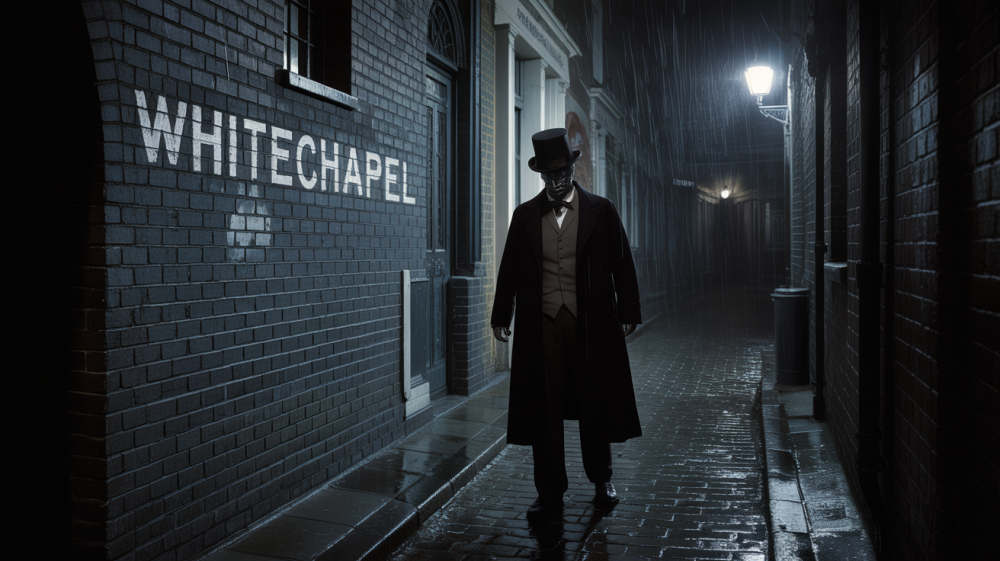
From Jack the Ripper to Thomas Croswell: Historical Serial Killer Fiction
Fascinated by serial killers but want to explore them through different time periods? Historical serial killer fiction combines the psychological intrigue of criminal behavior with the rich atmosphere of past eras. These books show that while investigative techniques may change, the human capacity for both evil and justice remains constant across centuries.
From Victorian London’s fog-shrouded streets where Jack the Ripper prowled to medieval monasteries hiding dark secrets, historical serial killer fiction proves that murder mysteries are timeless. These stories offer modern psychological insights applied to historical settings, creating unique reading experiences that educate while they terrify.

Step into the dark and read your FREE dark thriller

Over 100,000 downloads!
Why Historical Serial Killer Fiction Appeals to Modern Readers
Different Investigative Methods
Before DNA testing, fingerprinting, and modern psychology, investigators relied on observation, logic, and intuition to catch killers.
Atmospheric Settings
Historical periods provide rich, atmospheric backdrops that enhance the mystery and danger of serial killer stories.
Social Context
Understanding how different societies viewed crime, women, mental illness, and justice adds layers to criminal investigations.
Educational Value
These books teach history while entertaining, showing how people lived, worked, and solved problems in different eras.
Timeless Psychology
Criminal behavior patterns remain consistent across time periods, making historical cases relevant to modern understanding.
Unique Challenges
Limited communication, transportation, and forensic tools create different obstacles for both killers and investigators.
What Makes Historical Serial Killer Fiction Different
Period-Accurate Investigation
Authors research actual police procedures, legal systems, and investigative methods from specific historical periods.
Social Constraints
Historical settings include realistic social limitations on who could investigate, what evidence was admissible, and how justice was served.
Technology Limitations
No phones, computers, or modern forensics means investigators must rely on observation, logic, and legwork.
Cultural Understanding
Authors explore how different time periods understood mental illness, criminal behavior, and social deviance.
Historical Figures
Some books feature real historical investigators, criminals, or incorporate actual unsolved cases from the past.
Authentic Details
Research into daily life, clothing, food, transportation, and social customs creates immersive historical experiences.
How We Ranked These Books
Historical Accuracy (25%)
Research quality and authentic portrayal of time period, including social conditions, technology, and investigative methods.
Serial Killer Psychology (25%)
Realistic and compelling portrayal of criminal behavior using period-appropriate understanding and modern psychological insights.
Atmospheric Writing (20%)
Ability to create immersive historical settings that enhance rather than overshadow the criminal investigation.
Investigation Quality (15%)
Logical and engaging mystery solving that works within historical constraints and capabilities.
Character Development (15%)
Strong protagonists who feel authentic to their time period while remaining relatable to modern readers.
Comparison Chart: Historical Serial Killer Fiction by Era
| Book Title | Author | Time Period | Location | Investigation Style | Historical Figure | Killer Type | Accuracy Level |
|---|---|---|---|---|---|---|---|
| The Name of the Rose | Umberto Eco | Medieval (1327) | Italy | Monk Detective | Fictional | Religious Killer | Very High |
| The Alienist | Caleb Carr | 1896 | New York | Early Psychology | Theodore Roosevelt | Child Killer | High |
| From Hell | Alan Moore | 1888 | London | Police/Conspiracy | Jack the Ripper | Real Case | Medium |
| The Dante Club | Matthew Pearl | 1865 | Boston | Literary Detective | Longfellow/Holmes | Literary Killer | High |
| The Ripper’s Shadow | Laura Joh Rowland | 1888 | London | Female Detective | Jack the Ripper | Real Case | Medium |
| The Devil in the White City | Erik Larson | 1893 | Chicago | True Crime | H.H. Holmes | Real Killer | Very High |
| The Whitechapel Fiend | Cassandra Clare | 1888 | London | Shadowhunters | Jack the Ripper | Supernatural | Low |
| Dust and Shadow | Lyndsay Faye | 1888 | London | Sherlock Holmes | Jack the Ripper | Real Case | High |
| The Seance | John Harwood | 1880s | England | Gothic Investigation | Fictional | Family Killer | Medium |
| A Conspiracy of Paper | David Liss | 1719 | London | Jewish Detective | Fictional | Financial Murder | High |
| The Hangman’s Daughter | Oliver Pötzsch | 1660 | Germany | Executioner Detective | Fictional | Village Killer | High |
| Dissolution | C.J. Sansom | 1537 | England | Tudor Lawyer | Thomas Cromwell | Monastery Killer | Very High |
| The Ghosts of Belfast | Stuart Neville | 1998/Troubles Era | Northern Ireland | IRA Aftermath | Fictional | Political Killer | High |
Top 15 Historical Serial Killer Fiction Books Ranked
1. The Name of the Rose by Umberto Eco
Historical Accuracy: 10/10 | Serial Killer Psychology: 9/10 | Atmospheric Writing: 10/10
Why it’s #1: This medieval monastery mystery combines philosophical depth with serial killer investigation in a meticulously researched 14th-century setting.
Historical setting: Medieval monastery in 1327 Italy, perfectly capturing religious, political, and intellectual climate of the period.
Investigation style: Brother William of Baskerville uses proto-scientific methods and logical deduction centuries before modern detective work.
Killer psychology: Religious fanaticism and book preservation create complex motivations that feel authentic to the medieval mindset.
Educational value: Teaches medieval history, philosophy, and religious politics while maintaining compelling mystery structure.
Literary significance: Influenced countless historical mysteries and demonstrated literary fiction could successfully incorporate genre elements.
Best for: Readers who appreciate intellectual challenges and detailed historical research alongside mystery solving.
Historical accuracy: Extensive research into medieval life, religious practices, and philosophical debates of the era.
2. The Alienist by Caleb Carr
Historical Accuracy: 9/10 | Serial Killer Psychology: 10/10 | Atmospheric Writing: 9/10
Why it’s #2: Set in 1896 New York, this novel shows early criminal psychology being applied to catch a serial killer targeting children.
Historical figures: Features Theodore Roosevelt as police commissioner and incorporates real historical personalities.
Psychology focus: Dr. Laszlo Kreizler represents early criminal psychology and alienist practices of the 1890s.
Social issues: Addresses class inequality, corruption, and social prejudices that affected both victims and investigation.
Investigation methods: Shows transition from traditional police work to scientific criminal investigation.
Atmospheric detail: Vivid portrayal of Gilded Age New York with accurate historical and social details.
Best for: Readers interested in the development of criminal psychology and late 19th-century American history.
Research quality: Extensive historical research creates authentic portrayal of 1890s police work and social conditions.
3. The Devil in the White City by Erik Larson
Historical Accuracy: 10/10 | Serial Killer Psychology: 8/10 | Atmospheric Writing: 9/10
Why it’s #3: This non-fiction reads like a novel, telling the true story of H.H. Holmes and the 1893 Chicago World’s Fair.
True crime: Based entirely on real events, people, and historical records from the 1893 World’s Columbian Exposition.
Dual narrative: Alternates between the fair’s construction and Holmes’s murder spree, showing light and dark sides of progress.
Historical significance: Captures America’s transition into the modern era through architecture, technology, and social change.
Criminal psychology: Holmes represents early documented psychopathic behavior studied through historical records.
Research depth: Years of archival research create the most accurate portrayal possible of both subjects.
Best for: True crime fans and readers interested in American history and the development of modern serial killing.
Educational value: Teaches about late 19th-century America, World’s Fair history, and early criminal investigation.
4. The Dante Club by Matthew Pearl
Historical Accuracy: 8/10 | Serial Killer Psychology: 7/10 | Atmospheric Writing: 8/10
Why it’s #4: Literary luminaries including Longfellow and Oliver Wendell Holmes investigate murders based on Dante’s Inferno in 1865 Boston.
Literary connection: Murders mirror punishments from Dante’s Inferno, creating intellectual puzzle for literature scholars to solve.
Historical figures: Features real poets and writers as detectives, showing their personalities and relationships.
Post-Civil War setting: Boston in 1865 dealing with war’s aftermath and changing social conditions.
Cultural themes: Explores translation work, literary appreciation, and intellectual life in 19th-century Boston.
Investigation style: Literary scholars use textual analysis and cultural knowledge to understand killer’s psychology.
Best for: Readers who enjoy literary references, historical Boston, and intellectual puzzle-solving.
Period detail: Accurate portrayal of 1860s Boston intellectual society and post-Civil War social conditions.
5. Dissolution by C.J. Sansom
Historical Accuracy: 10/10 | Serial Killer Psychology: 7/10 | Atmospheric Writing: 9/10
Why it’s #5: Tudor lawyer Matthew Shardlake investigates murders at a monastery during Henry VIII’s dissolution of religious houses.
Tudor authenticity: Meticulous research into 1537 England captures political, religious, and social upheaval of the period.
Religious context: Monastery setting during dissolution provides unique historical backdrop for murder investigation.
Legal procedures: Shows Tudor legal system and how investigations were conducted in the 16th century.
Political intrigue: Murder investigation intersects with larger political and religious changes of Henry VIII’s reign.
Character development: Shardlake’s hunchback protagonist shows how physical differences affected social standing in Tudor times.
Best for: Readers interested in Tudor history, religious politics, and detailed historical research.
Series potential: First in ongoing series that continues exploring Tudor period through Shardlake’s investigations.
6. Dust and Shadow by Lyndsay Faye
Historical Accuracy: 8/10 | Serial Killer Psychology: 8/10 | Atmospheric Writing: 9/10
Why it’s #6: Sherlock Holmes investigates the Jack the Ripper murders in this authorized pastiche that captures Doyle’s style.
Jack the Ripper: Tackles the most famous unsolved serial killer case using Doyle’s detective methods and reasoning.
Victorian atmosphere: Captures fog-shrouded London, East End poverty, and social conditions that enabled the murders.
Holmes authenticity: Successfully mimics Doyle’s writing style and character voices while addressing historical case.
Investigation methods: Shows how Holmes’s deductive methods might have approached the Ripper investigation.
Social commentary: Addresses Victorian attitudes toward women, poverty, and prostitution that affected the investigation.
Best for: Sherlock Holmes fans and readers interested in Jack the Ripper theories and Victorian London.
Research balance: Combines historical Ripper facts with fictional Holmes investigation techniques.
7. The Hangman’s Daughter by Oliver Pötzsch
Historical Accuracy: 8/10 | Serial Killer Psychology: 7/10 | Atmospheric Writing: 8/10
Why it’s #7: Executioner Jakob Kuisl investigates child murders in 1660 Bavaria, using his knowledge of death and violence to catch killers.
Unique detective: Executioner protagonist provides different perspective on death, violence, and criminal behavior.
German setting: 17th-century Bavaria with accurate portrayal of small-town life, superstitions, and social hierarchies.
Social prejudice: Explores how executioner families were socially ostracized despite providing necessary services.
Medical knowledge: Jakob’s experience with death and torture provides forensic insights unavailable to typical investigators.
Witch trial context: Investigation occurs during period of superstition and witch accusations affecting case dynamics.
Best for: Readers interested in German history, unique detective perspectives, and 17th-century social structures.
Cultural research: Authentic portrayal of Bavarian customs, superstitions, and legal practices of the period.
8. A Conspiracy of Paper by David Liss
Historical Accuracy: 8/10 | Serial Killer Psychology: 6/10 | Atmospheric Writing: 7/10
Why it’s #8: Benjamin Weaver, Jewish former boxer turned detective, investigates murders connected to early stock market manipulation in 1719 London.
Financial history: Explores early stock market development and financial crimes in 18th-century London.
Jewish perspective: Weaver’s Jewish identity adds cultural dimension and social prejudice elements to investigation.
Boxing background: Protagonist’s fighting skills provide physical capabilities and street knowledge useful for investigation.
Economic crime: Murder motives involve complex financial manipulation and early capitalism crimes.
Legal constraints: Shows how Jewish status affected legal rights and investigation capabilities in 18th-century England.
Best for: Readers interested in financial history, Jewish historical experience, and 18th-century London life.
Research depth: Accurate portrayal of early stock market operations and Jewish community life in London.
9. The Ripper’s Shadow by Laura Joh Rowland
Historical Accuracy: 7/10 | Serial Killer Psychology: 7/10 | Atmospheric Writing: 8/10
Why it’s #9: Female photographer Sarah investigates Jack the Ripper murders using her access to crime scenes and Victorian women’s perspectives.
Female detective: Sarah’s photography work provides unique access to crime scenes and different investigation perspective.
Jack the Ripper: Another take on the famous case with focus on how women experienced and investigated the murders.
Photography angle: Early crime scene photography and how visual evidence was used in Victorian investigations.
Women’s limitations: Realistic portrayal of constraints on women investigators in Victorian society.
East End setting: Detailed portrayal of London’s impoverished areas where the murders occurred.
Best for: Readers interested in female detective perspectives and photographic history in criminal investigation.
Social research: Accurate portrayal of women’s social positions and limitations in 1888 London.
10. The Seance by John Harwood
Historical Accuracy: 7/10 | Serial Killer Psychology: 7/10 | Atmospheric Writing: 9/10
Why it’s #10: Gothic mystery involving spiritualism, family secrets, and murder in 1880s England.
Spiritualism movement: Captures Victorian fascination with séances, mediums, and communication with the dead.
Gothic atmosphere: Traditional gothic mystery elements with family curses, ancestral homes, and buried secrets.
Family psychology: Multi-generational family dysfunction and secrets that lead to murder and revenge.
Victorian setting: 1880s English country house mystery with authentic period details and social structures.
Supernatural elements: Ambiguous supernatural elements that may be psychological manipulation or genuine phenomena.
Best for: Readers who enjoy gothic mysteries, family secrets, and Victorian spiritualism themes.
Atmospheric strength: Excellent at creating creepy, gothic atmosphere authentic to the Victorian period.
11. From Hell by Alan Moore
Historical Accuracy: 6/10 | Serial Killer Psychology: 8/10 | Atmospheric Writing: 10/10
Why it’s #11: Graphic novel exploring Jack the Ripper murders through conspiracy theory involving royal family and Freemasons.
Graphic medium: Comic format allows for powerful visual storytelling and atmospheric London imagery.
Conspiracy theory: Presents elaborate theory connecting murders to royal scandal and Masonic cover-up.
Artistic achievement: Groundbreaking graphic novel that elevated comics as serious literary medium.
Jack the Ripper: Creative interpretation of famous case with focus on social and political implications.
Visual storytelling: Combines historical research with powerful artistic interpretation of Victorian London.
Best for: Graphic novel readers and fans of conspiracy theories about historical crimes.
Artistic value: More focused on artistic and thematic expression than strict historical accuracy.
12. The Whitechapel Fiend by Cassandra Clare
Historical Accuracy: 4/10 | Serial Killer Psychology: 6/10 | Atmospheric Writing: 7/10
Why it’s #12: Shadowhunters investigate Jack the Ripper murders with supernatural elements in this urban fantasy take on historical events.
Fantasy elements: Supernatural explanation for Jack the Ripper murders within Shadowhunter mythology.
YA appeal: Written for young adult audience with fantasy romance alongside historical mystery.
Jack the Ripper: Uses famous historical case as backdrop for supernatural adventure story.
Victorian London: Atmospheric portrayal of 1888 London adapted for fantasy setting and younger readers.
Character relationships: Focus on romantic relationships and character development within historical setting.
Best for: Young adult readers who enjoy fantasy romance with historical settings.
Genre blend: Successfully combines historical setting with urban fantasy elements for YA audience.
13. The Ghosts of Belfast by Stuart Neville
Historical Accuracy: 8/10 | Serial Killer Psychology: 8/10 | Atmospheric Writing: 8/10
Why it’s #13: Former IRA member haunted by victims’ ghosts investigates murders connected to Northern Ireland’s Troubles.
Recent history: Explores aftermath of Northern Ireland conflict and how violence affects individuals and communities.
Political context: Murder investigation intertwined with political history and ongoing effects of sectarian conflict.
Psychological trauma: Protagonist’s PTSD and guilt manifest as ghostly visions driving investigation forward.
Irish setting: Belfast and Northern Ireland locations with authentic cultural and political details.
Moral complexity: No clear heroes or villains in investigation involving political violence and personal responsibility.
Best for: Readers interested in Irish history, political thrillers, and psychological exploration of violence aftermath.
Contemporary relevance: Addresses how historical political violence continues affecting present-day communities.
14. The Historian by Elizabeth Kostova
Historical Accuracy: 7/10 | Serial Killer Psychology: 6/10 | Atmospheric Writing: 9/10
Why it’s #14: Multi-generational investigation into Vlad the Impaler and Dracula legend spanning several historical periods.
Historical span: Covers multiple time periods from medieval Romania to 1970s, showing how past affects present.
Academic investigation: Scholarly research methods used to investigate historical serial killer and vampire legend.
Atmospheric writing: Rich historical detail and gothic atmosphere across different time periods and locations.
Dracula connection: Explores historical basis for Dracula legend and Vlad the Impaler’s actual crimes.
Family mystery: Multi-generational investigation passed down through family members across decades.
Best for: Readers who enjoy gothic historical fiction, vampire lore, and multi-period narratives.
Research quality: Extensive historical research into Eastern European history and Dracula scholarship.
15. The Fire Engine That Disappeared by Maj Sjöwall and Per Wahlöö
Historical Accuracy: 8/10 | Serial Killer Psychology: 7/10 | Atmospheric Writing: 7/10
Why it’s #15: 1960s Swedish police procedural that helped establish Nordic noir while investigating complex murder case.
Nordic noir origins: Early example of Scandinavian crime fiction that influenced entire genre development.
Social criticism: Uses crime investigation to critique Swedish welfare state and social problems.
Police procedural: Realistic portrayal of 1960s police work and investigation methods in Sweden.
Historical significance: Important in crime fiction history as one of first serious police procedural series.
Character development: Beck and colleagues feel like real police officers rather than heroic detectives.
Best for: Readers interested in crime fiction history and early examples of realistic police procedurals.
Cultural importance: Groundbreaking series that changed how crime fiction portrayed police work and social issues.
Historical Periods in Serial Killer Fiction
Medieval Period (1000-1500)
- Limited law enforcement and investigation methods
- Religious explanations for criminal behavior
- Superstition and folk beliefs affecting investigations
- Examples: The Name of the Rose, medieval monastery mysteries
Renaissance/Early Modern (1500-1700)
- Development of more systematic legal procedures
- Scientific revolution beginning to affect investigation
- Religious and political upheaval creating social chaos
- Examples: Dissolution, The Hangman’s Daughter
18th Century (1700-1800)
- Age of Reason affecting criminal investigation approaches
- Development of modern legal systems and police forces
- Economic development creating new types of crime
- Examples: A Conspiracy of Paper
19th Century (1800-1900)
- Industrial Revolution changing society and crime
- Development of scientific investigation methods
- Modern police forces and detective work emerging
- Examples: The Alienist, Jack the Ripper fiction
Early 20th Century (1900-1950)
- World wars affecting society and criminal behavior
- Psychology becoming established science
- Modern forensic techniques beginning development
- Examples: Various war-period mysteries
The Appeal of Jack the Ripper Fiction
Most Famous Unsolved Case
Jack the Ripper remains the most notorious unsolved serial killer case, providing endless speculation opportunities.
Victorian Setting
1888 London offers rich atmospheric possibilities with fog, gas lights, and stark class divisions.
Multiple Theories
Numerous real theories about the killer’s identity provide different fictional possibilities to explore.
Social Commentary
The case highlights Victorian attitudes toward women, poverty, and social inequality.
Investigation Limitations
Victorian police methods create interesting constraints for both historical killers and fictional detectives.
Cultural Impact
The case influenced popular culture so extensively that readers have existing knowledge and interest.
Research Challenges for Historical Serial Killer Authors
Accurate Investigation Methods
Authors must research what investigative techniques were actually available in specific time periods.
Social Constraints
Understanding how gender, class, and social position affected who could investigate and how.
Legal Systems
Different historical periods had varying legal procedures, evidence requirements, and punishment methods.
Daily Life Details
Accurate portrayal requires extensive research into clothing, food, transportation, and social customs.
Language and Dialogue
Creating authentic-sounding speech without making it incomprehensible to modern readers.
Psychological Understanding
Balancing period-accurate understanding of mental illness with modern psychological insights.
Step into the dark and read your FREE psychological thriller
Over 100,000 downloads!
Educational Benefits of Historical Serial Killer Fiction
History Learning
These books teach history through engaging stories rather than dry textbook formats.
Social Understanding
Readers learn how different societies structured themselves and solved problems.
Investigation Evolution
Shows how criminal investigation methods developed and improved over time.
Cultural Awareness
Understanding different time periods builds appreciation for social progress and continued challenges.
Critical Thinking
Evaluating historical evidence and theories develops analytical skills.
Empathy Development
Understanding how people lived in different circumstances builds compassion and perspective.
Choosing Historical Serial Killer Books
Time Period Interest
Select books from historical periods that personally interest you for maximum engagement. Or return to the modern world of serial killer fiction.
Research Quality
Look for authors with strong research backgrounds or academic credentials in relevant fields.
Writing Style
Some authors write in modern style while others attempt period-appropriate language.
Violence Level
Historical books vary in graphic content from literary mysteries to detailed crime descriptions.
Series vs. Standalone
Decide whether you want ongoing characters or complete stories in single books.
Historical Accuracy Priority
Determine how important strict accuracy is versus dramatic storytelling and entertainment.
The Future of Historical Serial Killer Fiction
Diverse Perspectives
More authors from varied backgrounds are bringing different cultural perspectives to historical crime.
Lesser-Known Periods
Writers increasingly explore time periods and locations beyond traditional European and American settings.
Improved Research
Better access to historical records and scholarly resources improves accuracy and authenticity.
Genre Blending
Authors combine historical settings with fantasy, science fiction, and other genres for unique approaches.
Female and Minority Voices
More diverse protagonists and authors bring previously unexplored perspectives to historical crime.
Global Settings
Historical serial killer fiction expands beyond Western settings to explore crime worldwide.
Final Thoughts: Murder Across Time
Historical serial killer fiction proves that the human fascination with crime and justice transcends any single time period. These books show us that while technology and social structures change, the fundamental questions about good and evil, justice and injustice, remain constant across centuries.
The best historical serial killer fiction does more than just transplant modern crime stories into period settings. It explores how different societies understood criminal behavior, conducted investigations, and sought justice within their own cultural and technological constraints.
From medieval monasteries to Victorian London, from Tudor England to 1890s New York, these books demonstrate that every era has produced both monsters and heroes. They remind us that the battle between those who would harm others and those who would stop them is as old as civilization itself.
Whether you’re drawn to the intellectual challenges of medieval mysteries, the atmospheric fog of Jack the Ripper’s London, or the early scientific methods of late 19th-century investigators, historical serial killer fiction offers rich, educational, and entertaining reading experiences that illuminate both past and present.
As you explore these carefully researched stories, you’ll discover that understanding how our ancestors dealt with humanity’s darkest impulses can provide valuable insights into contemporary issues. After all, the tools may change, but the human heart – in both its capacity for evil and its drive for justice – remains remarkably consistent across the ages.